During the celebration
Keep the recognition path visible without turning the event into a checkout experience.
Aplauso for events
Aplauso creates a clear, optional recognition moment for servers, bartenders, captains, coordinators, and behind-the-scenes teams, even when the host settled the invoice long before.

Where the opportunity lives
Aplauso belongs at the point where the guest feels the value, not only where payment happens.
Keep the recognition path visible without turning the event into a checkout experience.
Give guests an optional way to recognize the people serving them directly.
Let the host or guests recognize the team while the service memory is still fresh.
Keep voluntary appreciation distinct from deposits, labor charges, and required service fees.
Product proof
Authorized users can review eligibility and simulate a complete 100-share-unit policy before publishing it for future tips; Aplauso does not turn the guest into the workforce allocator.
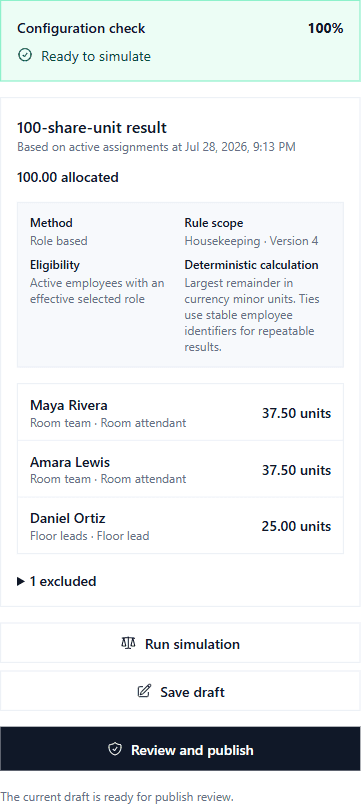
The people behind the experience
Aplauso can direct recognition to an individual, role, or shared team without asking the guest to understand the organization behind the service.
What the interaction connects
Guests get a cashless recognition path while permitted operators receive a service signal with evidence and boundaries.
Give people at the event a path to recognize service even when they are not the invoice payer.
Match the experience to a person, role, or defined event team.
Connect the response to the specific service moment and team.
Understand what guests and hosts valued with the event and team context attached.
A rollout you can learn from
A focused banquet, wedding, or catered event creates a clean baseline without changing every workflow at once.
Select a repeatable format with a clearly defined service team.
Explain whether recognition belongs to an individual, role, or event pool.
Look at guest use, team understanding, feedback, and distribution clarity together.
What waiting costs
Every shift you can’t hear your guests, problems go public, great people go unnoticed, and you find out last.
Self-serve setup. No subscription or setup fee.
A low rating reaches a manager privately first, so you have a chance to make it right before it goes online.
The people who make guests happy want their work noticed. Show them by name, with the guest’s words and tips attached.
Know how guests felt today, by person, team, and location, instead of waiting for next quarter’s survey.
Straight answers
No. Aplauso is an optional recognition path. Required charges and contractual gratuities should remain clearly separate.
Yes. The experience can support a defined shared team or an individual role depending on the event model.
No. They scan a code and use the mobile web experience.
Begin with one event type or service team and expand only after the first rollout is clear to guests and staff.
Keep exploring
Compare recognition when the event and payment moments are separated.
ExploreExplore shared recognition and distribution clarity.
ExploreUse plain language to keep required charges and optional appreciation distinct.
Explore