At the end of the route
Make appreciation easy while the guide or driver experience is still fresh.
Aplauso for tours and transportation
Aplauso helps guests recognize guides and drivers from their phone while giving operators feedback tied to the route, vehicle, and experience that created it.

Where the opportunity lives
Aplauso belongs at the point where the guest feels the value, not only where payment happens.
Make appreciation easy while the guide or driver experience is still fresh.
Use a branded Reward Code touchpoint without interrupting the journey or asking for an app.
Follow up with a recognition path connected to the actual service team.
Capture feedback with enough route and service context for the operator to understand it.
Product proof
Review permitted responses and satisfaction with enough route and team context to understand who created the experience and where the signal belongs.
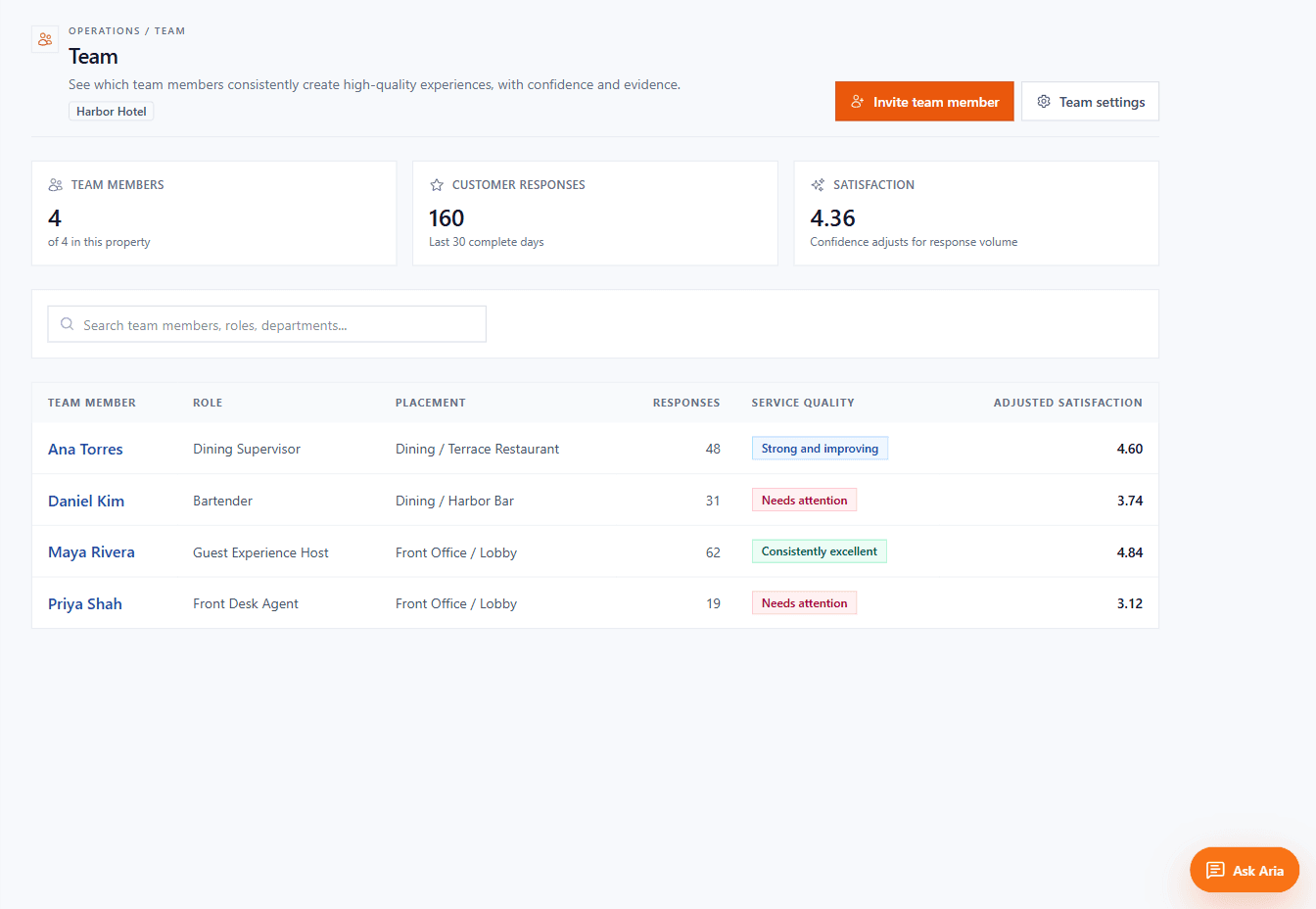
The people behind the experience
Aplauso can direct recognition to an individual, role, or shared team without asking the guest to understand the organization behind the service.
What the interaction connects
Guests get a cashless recognition path while permitted operators receive a service signal with evidence and boundaries.
Give satisfied passengers an immediate and natural way to say thank you.
Give passengers a way to recognize the service when they have no local cash.
Connect the response to the journey rather than a generic company survey.
Help operators see which people and routes consistently create good experiences.
A rollout you can learn from
The end of a route is often the cleanest place to test whether guests use a digital recognition path.
Select a journey with repeat volume and clear guide or driver ownership.
Use a vehicle sign, guide card, receipt, or post-ride message that feels optional and natural.
Review recognition, feedback, and team response before extending the model.
What waiting costs
Every shift you can’t hear your guests, problems go public, great people go unnoticed, and you find out last.
Self-serve setup. No subscription or setup fee.
A low rating reaches a manager privately first, so you have a chance to make it right before it goes online.
The people who make guests happy want their work noticed. Show them by name, with the guest’s words and tips attached.
Know how guests felt today, by person, team, and location, instead of waiting for next quarter’s survey.
Straight answers
No. They scan a code and complete the experience in their mobile browser.
Yes. It can also be directed to a shared team where the experience belongs to more than one person.
Use the natural thank-you moment: inside the vehicle, on a guide card, at route completion, or in a post-service message.
Yes. One repeatable route gives the operator a clear baseline before expansion.
Keep exploring